What if an aircraft could do more than serve as a training object?
When an aircraft becomes a classroom
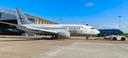
At Lufthansa Technical Training, our Boeing 737 training aircraft in Hamburg has been transformed into an interactive learning environment that helps apprentices understand complex aircraft technology exactly where it is applied: on the aircraft itself.
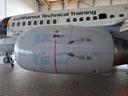
The redesigned aircraft combines technical illustrations, explanatory content, and digital learning elements. Structural components such as stringers, frames, and fuel lines are visualized directly on the aircraft, making normally hidden structures visible and easier to understand. Selected components, including the engine, cabin door, and aircraft seat, are complemented by technical background information that helps bring theoretical concepts to life.
For apprentices, the aircraft provides a unique learning opportunity. While practical training often focuses on individual components, the Boeing 737 allows learners to experience a complete aircraft and better understand how its systems interact. This creates a stronger connection between theoretical knowledge and practical application.
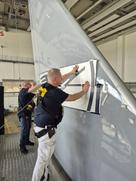
A key feature of the new concept is the integration of QR codes throughout the aircraft. By scanning these codes, apprentices gain direct access to additional learning materials within Lufthansa Technical Training’s Learning Management System. Training content, technical documentation, presentations, and further resources can be explored exactly where the corresponding component is located, enabling a seamless connection between classroom learning and hands-on training.
“Our training aircraft accompanies many apprentices throughout their entire training journey. With the new design, we are creating additional opportunities to explain technical concepts directly on the aircraft and to connect theory and practice even more closely. In this way, we continue to develop and enhance our training programs.” Michael Paarmann, Head of Vocational Training, Lufthansa Technical Training
The idea for the redesign originated in 2024. Through close collaboration across multiple departments, a concept was developed that combines visual design with educational content. The result is far more than a new aircraft appearance. It is a learning environment that makes knowledge accessible where it is needed most and helps apprentices gain a deeper understanding of the technology behind modern aircraft.